
The Myth of the AMIRI Outlet: Why It Was Never Real
Across luxury search, scarcely anything attracts as much opportunistic traffic as the phrase describing an AMIRI outlet. Hand-finished denim from the Los Angeles house has been logged at roughly seven hundred and fifty to eleven hundred dollars, and that level is what lends a promised outlet discount its plausibility. This guide pulls apart what the brand has said on the record from the claims attached to it by bystanders. Unusually, the central fact here is written down, since AMIRI recorded its position in a United States federal court filing in July 2021. If you are getting ready to buy amiri online, the first thing worth having is a reliable picture of which seller categories actually exist, and that picture belongs ahead of the card number. The short answer is that the official picture is modest, published by the brand, and contains no outlet of any kind.
Myth: somewhere out there is an official AMIRI outlet website
Fact: the brand repudiated this in a public court document. In a complaint lodged on 12 July 2021 in the United States District Court for the Central District of California, docketed as 2:21-cv-05599, AMIRI said on the record that it “does not have an AMIRI outlet store, nor has it ever authorized any person or business to operate such a store.” Named as defendant was PEG Tech, an internet service provider in San Jose, accused of with full awareness hosting a counterfeit-selling site presented as an AMIRI outlet. In September 2021 the case was voluntarily dismissed, which usually points to a settlement, though it in no way weakens what the brand said. One sentence is what lets this myth be closed rather than only doubted. What stands here is not a writer’s guess but the trademark owner telling a federal judge on the subject of what it operates.
Myth: the online outlet may be absent, yet the physical outlet stores are real
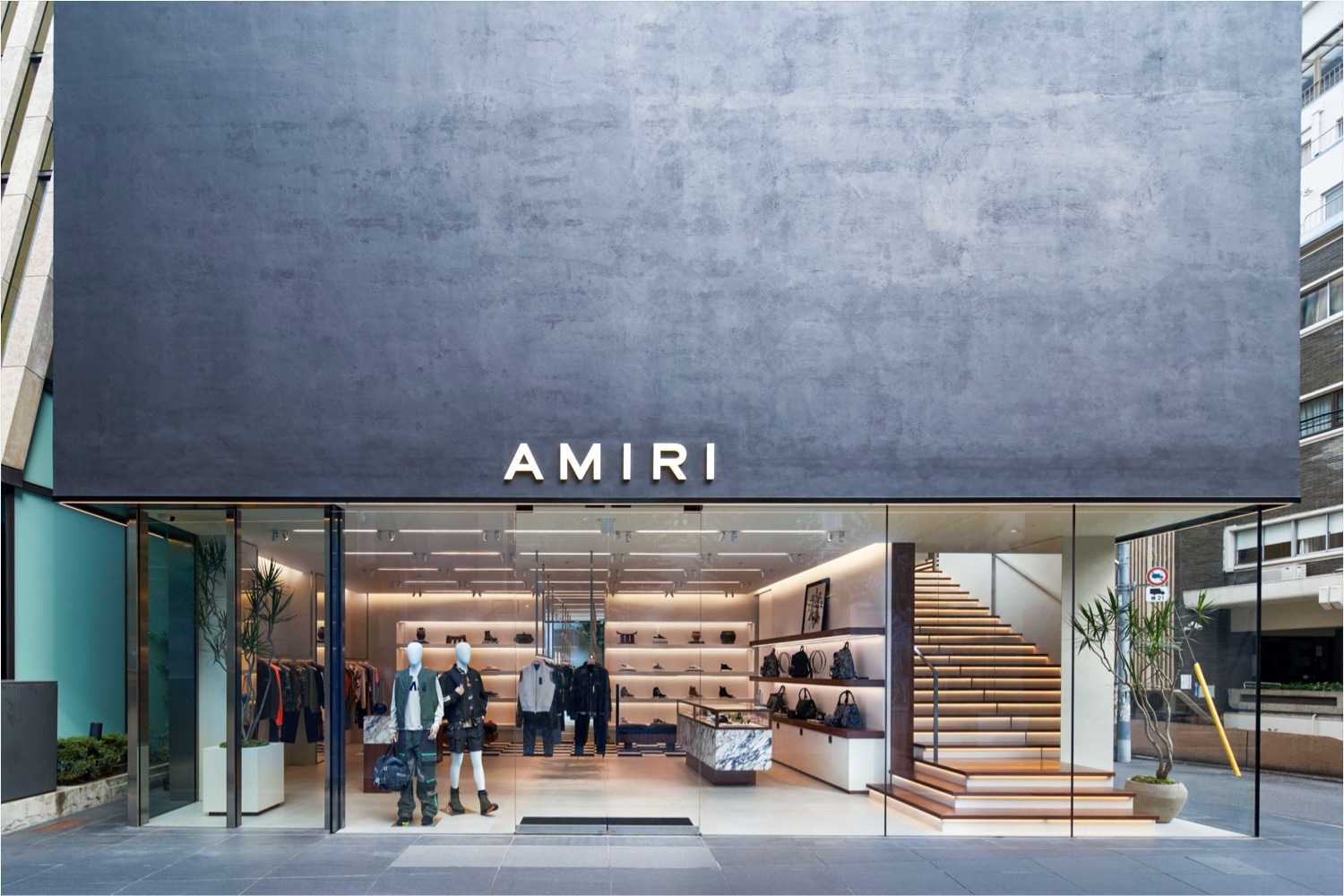
Fact: the wording reaches outlet stores as a class, which means dividing the question into online and physical saves nothing. The brand’s retail locations page identifies roughly thirty-three boutiques, several marked as coming soon, each full-price rather than a markdown format. Trade press in 2026 pitched the figure at about thirty-one stand-alone stores, which is close enough to be credible. The first permanent amiri sale store appeared on Rodeo Drive in Beverly Hills in 2020; Milan followed as the first permanent European location. The figure of one hundred and ninety-five stores found in reference material is almost certainly mistaken, as it folds wholesale doors into a count of owned shops. Wholesale is separate, reported at roughly one hundred and fifty accounts across some four hundred points of sale, none of which are outlets.
Myth: the brand name inside a web address means the house has a hand in it
Fact: web addresses are sold to whoever pays for them, and no registrar checks who owns the trademark. The site at the heart of the 2021 case billed itself as an official discount store with goods described as one hundred per cent original, the kind of wording a real brand seldom reaches for. The cheapest borrowed credibility comes from pairing a brand name with a trust word such as outlet, official, store or sale. That trick is why searches for amiri clothing turn up a long tail of near-identical shops running one template and one product feed. Their photography is usually lifted from official campaign imagery, and that is why the pages look convincing. What control of a name proves is nothing at all, while a place on the brand’s published stockist list proves a great deal.
Myth: constant discounting across luxury means a big sale price tells you nothing
Fact: AMIRI does discount, and pretending otherwise would be its own form of misinformation. In-season markdowns of forty to seventy per cent are standard at authorised multi-brand retailers, and observed 2026 listings put a Carpenter jean at about one thousand one hundred and forty-nine dollars reduced to roughly six hundred and eighty-nine. Reductions of fifty to eighty per cent across every category at once, current season included, are not what legitimate discounting looks like. Selective, concentrated in past-season stock and kept to a retailer’s sale section: that is what real markdowns look like, and they never constitute an entire shop. When permanent deep discounting is the whole business model, the page is describing a stock position that nobody actually holds. Searches for amiri jeans and amiri hoodie put the two kinds next to each other, and what separates them is structural.
The recurring pattern behind counterfeit outlet pages
The 2021 case and the search results around it describe a template rather than a one-off. The pages come off a production line: one layout reused, recycled phrasing, and the same operators behind large numbers of them. Naming names accomplishes nothing here, as addresses cost little and the one you run into next month will not be the one named today. Only the pattern holds still, which is why pattern recognition is a buyer’s actual safeguard. The recurring signals are gathered in the table below, drawn from the documented case and from how such sites have been observed to behave. A single signal decides nothing; two or three at once are reason enough to go elsewhere.
| Tell | What you actually see | What it tells you |
|---|---|---|
| Status the site declares for itself | A self-description as an official discount store, with originality guaranteed | Real channels are named on the brand’s list and never have to argue for themselves |
| A trust word welded onto the brand name | The house name joined to outlet, shop, sale or a country code | Credibility appropriated rather than earned, and no affiliation at all |
| Heavy reductions applied everywhere at once | Every category slashed by half or more, with the current season swept in | Authorised channels do not mark down current stock wholesale |
| Implausible catalogue depth | Denim, footwear and outerwear running to hundreds of items, every one of them in stock | Real allocation for a brand this size is limited and uneven |
| Second-hand product images | Official campaign photography with no original studio shots | Suggests a copied product feed instead of inventory actually held |
| Thin corporate identity | Policy pages lifted from boilerplate, with no address, registration or phone that can be checked | Real retailers put traceable company details in the open |
| Hurry-up mechanics | Timers running down, warnings about low stock, banners saying the sale ends tonight | The whole purpose of urgency is to crowd out these checks |
| Irregular checkout | Bank transfer, crypto, or a payment page bearing the name of an unrelated business | A warning sign that arrives late and carries real weight |
Where genuinely discounted AMIRI comes from
Discounted stock is real enough, and understanding where it comes from leaves the myth with little to offer. Route one is the sale section of a retailer named on the brand’s stockist list, a list that spans department stores and specialist menswear shops. The second is the off-price arm of an established retail group, holding genuine past-season pieces at steep reductions, which is legitimate but not operated by the brand. Third is the secondary market, where standard core denim has been observed trading well below retail, though it brings authentication risk of its own. One large marketplace sits in an awkward middle position, absent from the brand’s online stockist list yet selling the label through partner boutiques that are themselves stockists. Nor is the stockist page closely maintained, given that it still lists a retailer that shut down in 2024 and displays obvious spelling errors.
A three-minute check before you enter a card number
The checks that count are quick, unglamorous and concerned with provenance far more than with product detail. Begin with the brand’s published stockist list and look for the seller’s name there, since that settles most cases at once. Next comes a verifiable company identity, by which is meant a registered business name, a physical address, a working phone number and specific policy pages. Compare the advertised price with observed market pricing: the signature sneaker has been observed around six hundred and fifty dollars, the core logo hoodie at a similar level. Treat the word outlet as disqualifying in itself, because the brand has stated on the record that it operates none. Last of all, establish whether the discount runs across the entire site or is confined to a defined sale section, and do all the checks rather than just the quick one.
What to do if you have already ordered from one
Act fast, since the first few hours are worth more than any conclusion you come to about the garment afterwards. Call your card issuer, describe the transaction as a suspected counterfeit purchase, and preserve every screenshot, confirmation message and tracking notice. Whatever justification is offered, do not send identity documents to the seller, and do not finish the payment through a different rail. Should a parcel arrive, keep the packaging and labels intact, because packaging is the easiest element for a counterfeiter to reproduce. The brand can verify only products bought directly from it or through an authorised stockist partner, and says it cannot authenticate items bought outside those channels. No brand-operated authentication service was found in this research, so a paid third-party opinion is the practical fallback, and the lasting protection remains the court filing’s point: if a seller calls itself an outlet, it is not the brand.